Level Monitoring

IoT Based Water Level Monitoring and Control System

An IoT water level monitoring system measures the level in tanks or reservoirs with ultrasonic or pressure sensors and shows it live on a phone, dashboard or wall display, with alerts when the level runs low or overflows. Livwize supplies the sensors, wired or wireless transmitters and remote pump or valve control.

Water Level Monitoring

IoT-based water level monitoring for tanks, reservoirs, wells, and rivers. Real-time alerts, trend analysis, and automated pump control.

  • 01

    Overflow Prevention

    Automatic alerts and pump shutoff prevent overflow.

  • 02

    Energy Optimization

    Run pumps only when needed based on actual levels.

  • 03

    Planning Data

    Historical data enables better water resource planning.

Water Level Monitoring
How IoT tank level monitoring and control works
  • Ultrasonic Sensors

    Non-contact level measurement with high accuracy.

  • Real-time Alerts

    SMS and email notifications for critical level changes.

  • Automated Pump Control

    IoT-controlled pump start/stop based on level thresholds.

Overview

How IoT tank level monitoring and control works

Accurate water level monitoring is critical for managing water supply, preventing overflow, and optimizing pump operations. Our IoT solutions use ultrasonic, pressure, and radar sensors to provide continuous, real-time level data from any water body or storage system.

Get automated alerts for critical levels, historical trend analysis for planning, and integration with pump controllers for automated water management.

Key Benefits

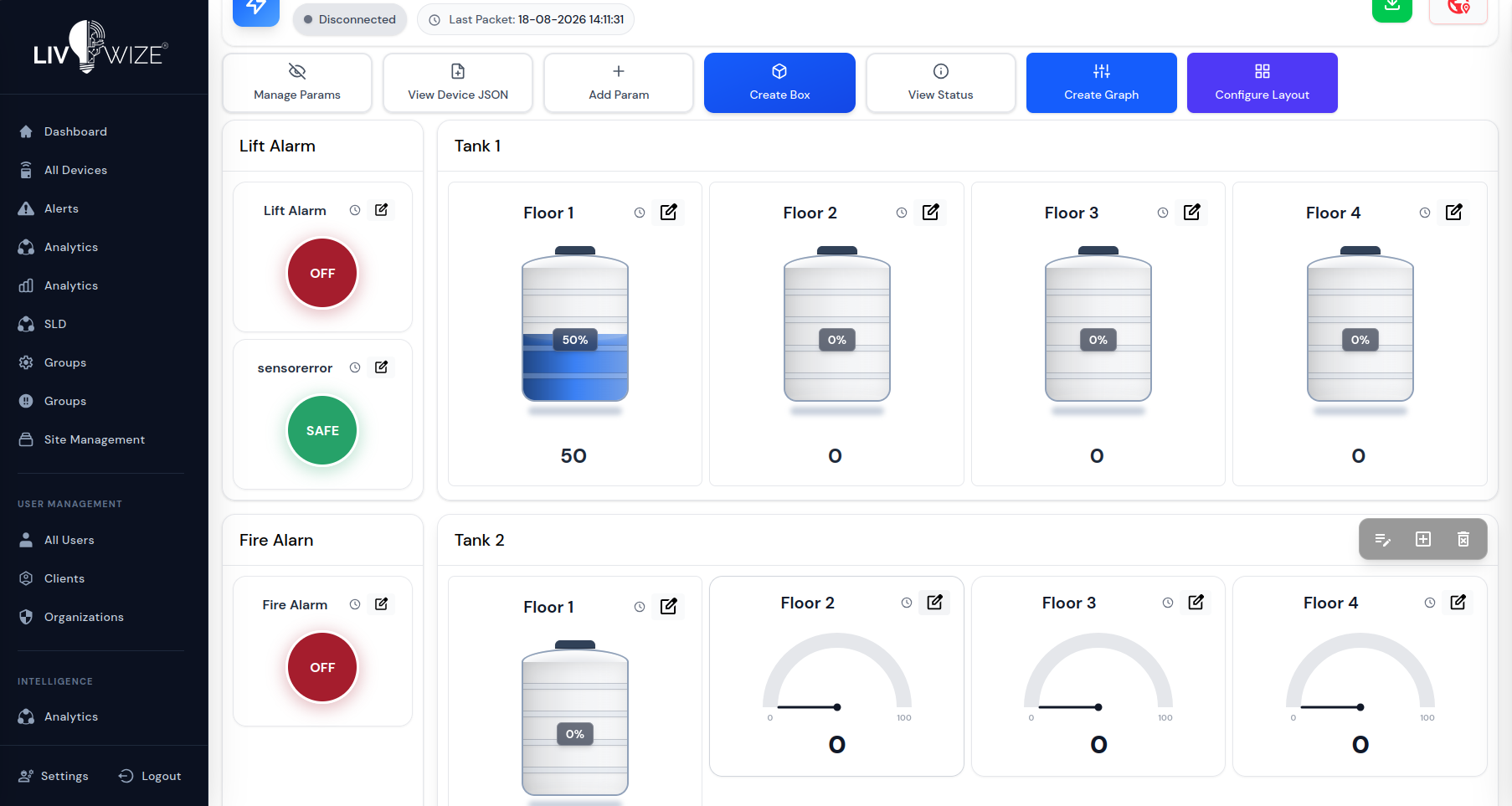
Tank levels, low-level alarms and pump visibility

Use the tank-level monitoring measurements below to review conditions, investigate changes and coordinate the team responsible for the equipment.

  • High-level tank alerts

    Automatic alerts and pump shutoff prevent overflow.

  • Pump run-state visibility

    Run pumps only when needed based on actual levels.

  • Tank-level history

    Historical data enables better water resource planning.

  • Sump-level alerts

    Early warning for rising water levels in rivers and canals.

  • Local pump interlocks

    Prevent water damage to underground structures.

  • Tank dashboard and display

    Real-time level data accessible from any device.

How It Works

Tank-level sensing, alerts and pump control sequence

  • 01

    Sensor Installation

    Deploy ultrasonic or pressure sensors at measurement points.

  • 02

    Continuous Monitoring

    Sensors transmit level data to cloud every minute.

  • 03

    Smart Alerts

    System triggers notifications when levels hit set thresholds.

  • 04

    Auto Control

    Pumps activated or deactivated automatically based on levels.

Applications

Water level monitoring for buildings and reservoirs

Match the tank-level monitoring configuration to the instruments, network and operator workflow at each installation.

  • Water Tanks

    Overhead and underground tank level monitoring.

  • Reservoirs

    Large reservoir and dam level tracking.

  • Rivers & Canals

    Flood monitoring and early warning systems.

  • Industrial Tanks

    Chemical, fuel, and process water tank monitoring.

  • Pumping Stations

    Automated pump control based on sump levels.

  • Building Management

    Water tank management for commercial buildings.

Tank level, alarms and pump operation

Choose the level measurement method for the tank geometry and liquid conditions. Ultrasonic and pressure-based sensors need different mounting arrangements. Identify the reference point used for empty and full readings so the dashboard and local indication agree.

High and low thresholds can notify the operator before a tank overflows or reaches an insufficient level. Any automatic pump or valve action needs the appropriate local controls and interlocks. Review the level history alongside equipment status to understand a slow fill, unexpected drawdown or missing reading.

Water-level monitoring configuration
Item Planning detail
Level sensor Ultrasonic or pressure-based selection for the installation
Level display Configured level, percentage or volume based on tank dimensions
Alerts High and low thresholds agreed with the operator
Integration Compatible gateway, pump status and control interface

Automatic pump control from tank level

A sump-to-overhead-tank sequence checks that the source sump has water before starting the transfer pump. A low overhead level requests filling, while the high-level point stops it. Use separate start and stop thresholds to avoid rapid cycling, and test the response when a sensor or its communication is unavailable.

Dry-run protection and overflow cut-off should be implemented through the appropriate local interlocks and controls. Remote monitoring gives operators level and pump-status visibility; cloud connectivity should not be the only protection against an unsafe pump state. Agree manual override, restart behaviour and fault acknowledgement with the installer.
Water-level sensor comparison

Level measurement approaches; exact range and accuracy depend on the selected instrument
Sensor Range / accuracy selection When to use it Installation check
Ultrasonic Specify tank height, dead zone and required resolution; confirm model datasheet Non-contact measurement where surface and mounting conditions permit Check obstructions, foam, vapour and the sensor reference point
Radar Confirm the selected radar span and accuracy for the tank Non-contact measurement after reviewing surface and process conditions Review antenna position, internals and enclosure requirements
Pressure / hydrostatic Choose pressure span for liquid depth and density; confirm accuracy Continuous measurement with a compatible submerged or process connection Check density, wetted materials, venting and cable protection
Float Point-level switching; continuous accuracy does not apply Independent high/low points and local interlocks Allow movement and provide access for inspection

Housing-project water-level monitoring example

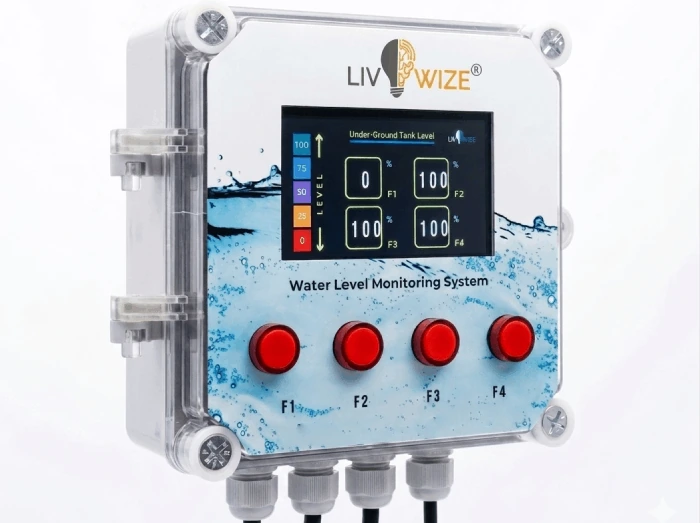
A supplied Gurugram housing-project example combined level sensors, wired and wireless transmitters and a custom colour-LCD water-level display. Visual and audible low-level alerts gave the site team a local view of tank availability.

Frequently asked questions

Can one dashboard monitor several tanks or sumps?

Yes, the design can assign each tank its own sensor, reference level and high/low thresholds and bring the records into one dashboard. Confirm the number of points, wired/wireless coverage and display requirements, and test any shared pump logic with the installer.

Which sensor is best for tank level measurement?

Ultrasonic sensors measure level without contacting the liquid, while pressure sensors infer level from the liquid column. Tank shape, medium, foam, installation access and the required range determine the suitable choice.

Can the system switch the pump automatically?

Livwize offers remote pump and valve control alongside level monitoring. Automatic operation needs agreed level thresholds, suitable control wiring and local protection and manual override arrangements.

Next Step

Monitor Water Levels 24/7

Deploy IoT level sensors for real-time monitoring and automated control.