Edge Computing

IoT Gateway Devices and Solutions

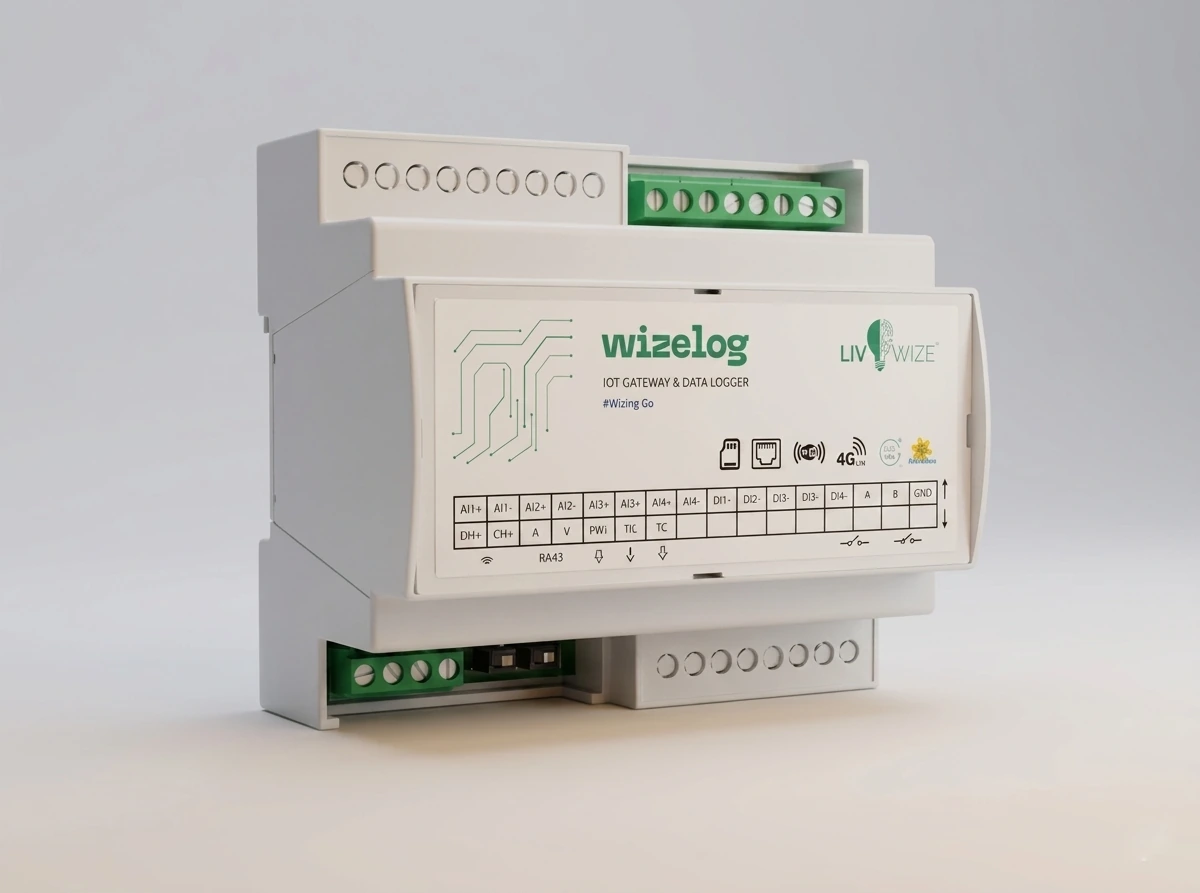
An IoT gateway is a device that collects data from sensors, meters and controllers on site and passes it to the cloud, translating field protocols such as Modbus RTU into internet protocols such as MQTT or HTTPS. Livwize gateways connect over 4G, Wi-Fi or Ethernet and are built for industrial panels.

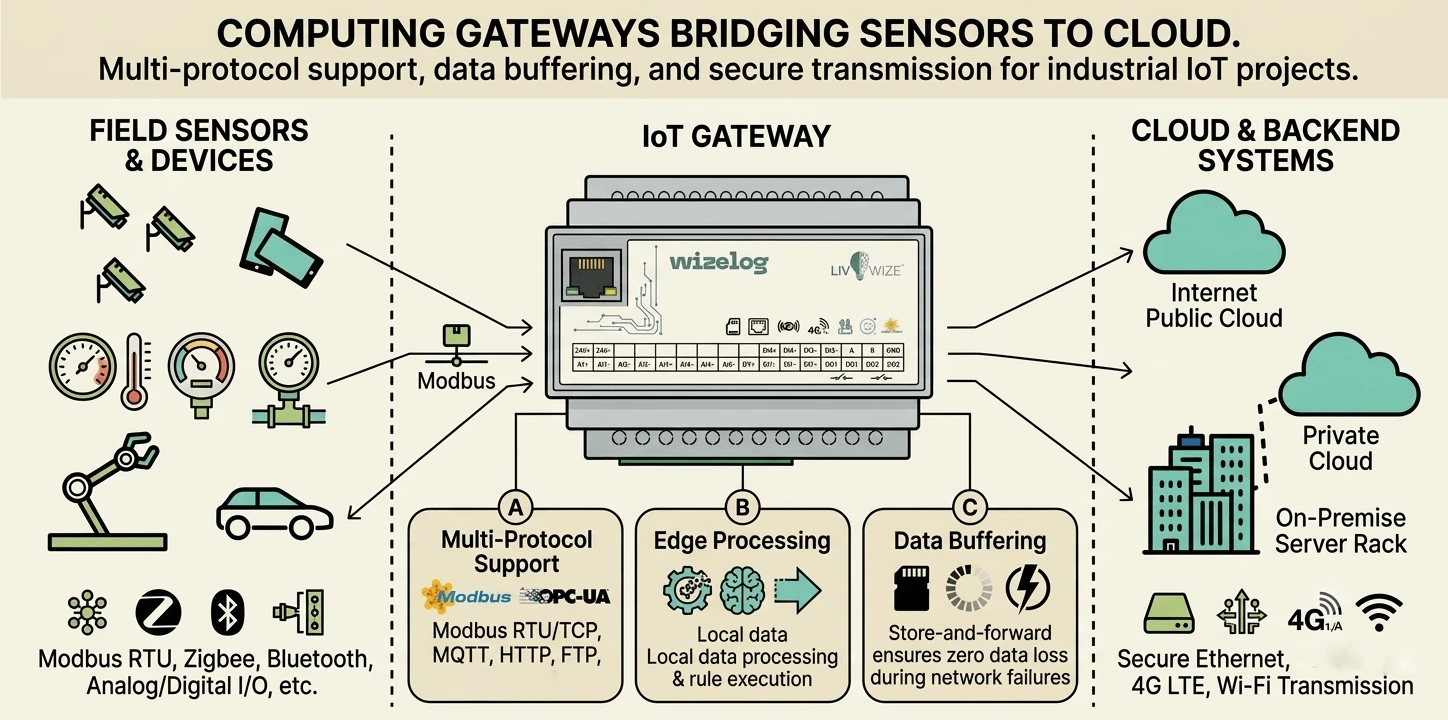
Edge computing gateways bridging sensors to cloud. Multi-protocol support, data buffering, and secure transmission for industrial IoT projects.

  • 01

    Universal Connectivity

    Connect any sensor or meter regardless of protocol.

  • 02

    Low Latency

    Edge processing enables real-time responses without cloud dependency.

  • 03

    Data Security

    End-to-end encryption and secure boot for tamper protection.

IoT Gateway Devices
How industrial IoT gateway devices connect instruments to the cloud
  • Multi-Protocol

    Modbus RTU/TCP, MQTT, HTTP, FTP, OPC-UA support.

  • Edge Processing

    Local data processing and rule execution at the edge.

  • Data Buffering

    Store-and-forward ensures zero data loss during network failures.

Overview

How industrial IoT gateway devices connect instruments to the cloud

IoT Gateway Devices are the backbone of any IoT deployment, bridging the gap between field sensors and cloud platforms. Our gateways support multi-protocol translation, edge processing, and secure data transmission for industrial environments.

Whether you need to connect legacy Modbus equipment to a cloud platform, buffer data during network outages, or run edge analytics for real-time decisions, our gateway devices deliver reliable performance in harsh industrial conditions.

Key Benefits

Connect field instruments to a shared data platform

Use the industrial gateways measurements below to review conditions, investigate changes and coordinate the team responsible for the equipment.

  • Field-interface selection

    Connect any sensor or meter regardless of protocol.

  • Acquisition intervals

    Edge processing enables real-time responses without cloud dependency.

  • Gateway access and transport

    End-to-end encryption and secure boot for tamper protection.

  • Timestamped gateway records

    Edge processing filters and validates data before cloud upload.

  • Panel integration

    Plug-and-play setup with web-based configuration.

  • Local buffering and recovery

    Store-and-forward ensures zero data loss in any conditions.

How It Works

Modbus to MQTT gateway data flow

  • 01

    Connect Sensors

    Plug sensors and meters into gateway via RS485, analog, or digital inputs.

  • 02

    Protocol Translation

    Gateway converts industrial protocols to cloud-friendly formats.

  • 03

    Edge Processing

    Local rules, alerts, and data aggregation run on the gateway.

  • 04

    Cloud Sync

    Processed data securely transmitted to cloud platform.

Applications

Gateways for energy, compliance and refrigeration

Match the industrial gateways configuration to the instruments, network and operator workflow at each installation.

  • Industrial Monitoring

    Connect PLCs, meters, and sensors to cloud platforms.

  • Energy Metering

    Aggregate data from multiple energy meters.

  • Environmental

    Connect air and water quality sensors to monitoring platforms.

  • Telecom Sites

    Centralize monitoring of DG sets, batteries, and HVAC at cell towers.

  • Solar Plants

    Connect inverters and sensors to monitoring dashboards.

  • Smart Buildings

    Integrate BMS sensors with cloud analytics platforms.

IoT gateway solutions by application

Match the gateway to the instrument output, receiving platform and site coverage. LoRa and LoRaWAN describe different integration choices; confirm the radio and network components before specifying a cold-room or agricultural installation.

Gateway, protocol and network choices for industrial applications
Application Gateway / integration Field protocol Network
Energy metering WizeLog RS-485 Modbus RTU meter registers 4G LTE / Ethernet; optional Wi-Fi
CPCB compliance CPCB OCEMS logger / DAQ Configured analyser interface and regulatory reporting protocol 4G / Ethernet
Cold rooms WizeLog with compatible temperature/humidity sensors Wired or wireless transmitter; LoRaWAN requires a compatible gateway and network Backhaul selected for the installation
Solar inverters WizeLog after inverter register-map review Supported inverter Modbus registers 4G / Ethernet; optional Wi-Fi
Telecom sites WizeLog with site meters and sensors Modbus, 4–20 mA or compatible status inputs 4G / Ethernet according to coverage

WizeLog and CPCB logger comparison

WizeLog figures come from its technical sheet and should not be transferred to a different CPCB DAQ model.

Published gateway capabilities; confirm the ordered hardware and firmware
Selection point WizeLog CPCB OCEMS logger
Primary use General industrial and infrastructure data logging Emission/effluent analyser acquisition and regulatory transmission
Inputs 1 × RS485; optional RS232; 4/8 × 4–20 mA (±1% FS) Selected analyser outputs; confirm interface count and station map
Networks 4G LTE / Ethernet; optional Wi-Fi and BLE 4G / Ethernet for configured regulatory reporting
Timing Logging from 1 minute; maximum configurable Reporting interval set by the approved station configuration
Power 12–24 V DC; optional 220–230 V AC Confirm the supply of the ordered CPCB model
Dimensions 105 × 90 × 66 mm Confirm the ordered enclosure and mounting
Storage Local logging; confirm fitted capacity Local buffering; confirm fitted capacity and retention

Remote gateway management

IoT gateway management brings configuration and diagnostic work into the deployment plan. WizeLog supports remote configuration, calibration and configurable reporting periods. Use device status and communications records to identify missing readings and investigate network interruptions.

Agree the remote-management functions for the supplied firmware before rollout. In particular, confirm OTA firmware updates, access permissions and recovery procedures against the exact model rather than assuming every gateway supports the same management features.

Frequently asked questions

How do I choose an IoT gateway?

List the sensors, meters or controllers and their interfaces first. Then check protocol/register support, channel count, required logging interval, local storage, power, enclosure and network coverage. Confirm the cloud or regulatory destination, remote configuration and OTA/recovery behaviour for the supplied firmware before ordering.

What is the difference between an IoT gateway and a router?

A router moves network traffic between networks. An industrial IoT gateway also reads field instruments, translates protocols and associates measurements with device identifiers and timestamps before forwarding them.

How does a Modbus to MQTT gateway work?

The gateway polls configured Modbus registers and converts raw register values into named measurements using the correct scale and units. It publishes those readings to an MQTT endpoint for storage, dashboards or another application.

Next Step

Deploy IoT Gateways

Bridge your sensors to the cloud with our industrial-grade IoT gateways.