Smart Farming

IoT Based Smart Agriculture Monitoring System

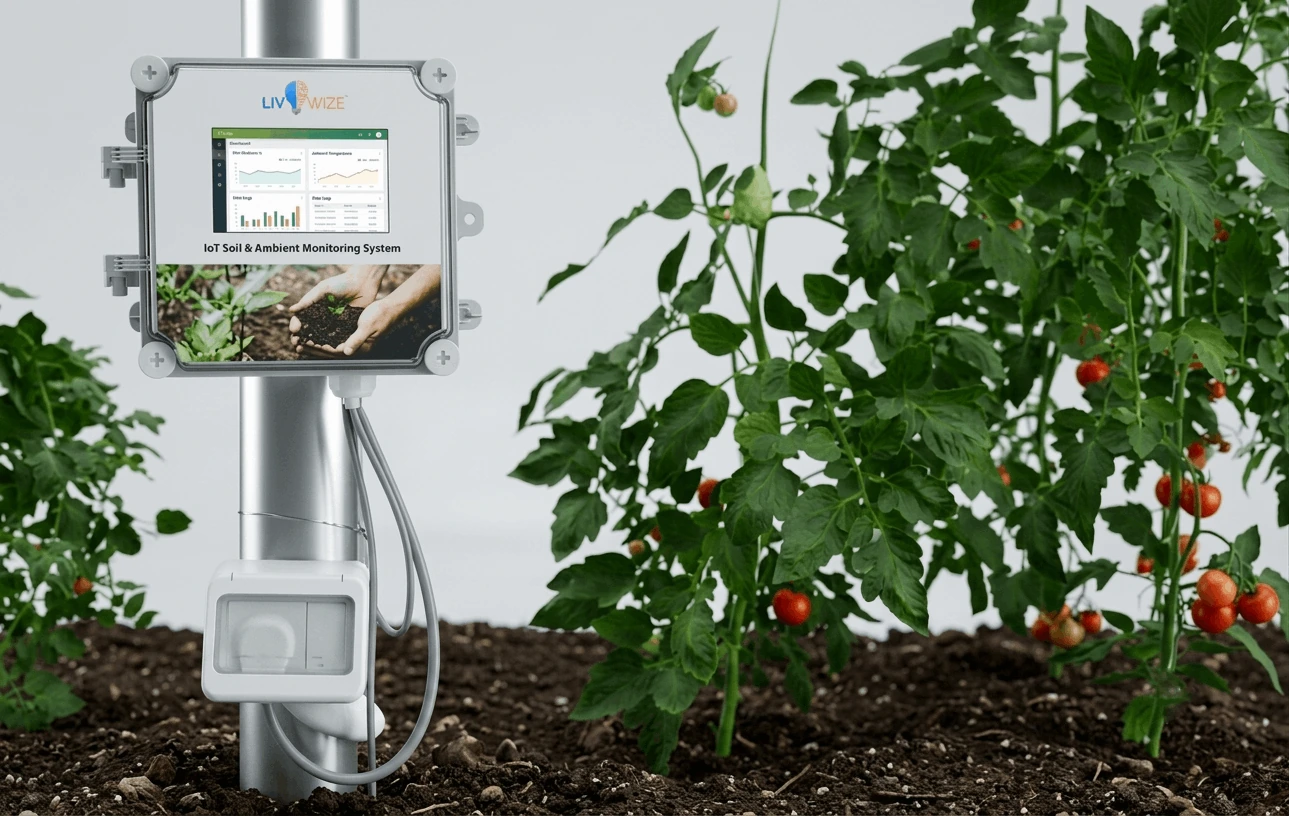
An IoT based smart agriculture monitoring system collects soil and climate data — moisture, pH, EC, NPK, temperature, humidity and light — from field sensors and sends it to a mobile or web dashboard. Livwize builds these systems with LoRa, GSM or Wi-Fi connectivity and remote irrigation control for farms, polyhouses and research stations.

Comprehensive IoT-powered farm monitoring, soil health, crop conditions, weather tracking, and yield optimization for modern, data-driven farming.

  • 01

    Increased Yield

    Data-driven decisions optimize crop productivity.

  • 02

    Resource Optimization

    Reduce water, fertilizer, and pesticide usage.

  • 03

    Early Warning

    Detect pest and disease threats before damage occurs.

Smart Agriculture Monitoring System
How an IoT based smart agriculture monitoring system works
  • Soil Health Monitoring

    Real-time NPK, pH, moisture, and temperature analysis.

  • Weather Stations

    On-field weather monitoring with forecast integration.

  • Crop Condition Tracking

    Growth stage monitoring and health assessment.

Overview

How an IoT based smart agriculture monitoring system works

Livwize Smart Farming and Agriculture Solution monitors weather and soil conditions for crop monitoring. Transform traditional farming with data-driven decisions, IoT-powered sensors, and trend analysis to maximize yield while minimizing resource usage.

Our comprehensive system covers soil NPK analysis, weather station integration, pest and disease early warning, and automated irrigation, all accessible from a single cloud dashboard.

Smart agriculture using IoT in India

Cereal fields, horticulture plots and polyhouses need different measurement points and irrigation settings. Soil and climate sensors make growing-zone conditions visible. Solar-powered nodes with battery backup can serve fields without mains power, with panel and battery sizing matched to the reporting schedule. Check mobile coverage at the gateway and survey LoRa paths around structures and vegetation before selecting a rural network. Crop targets and irrigation settings remain specific to the grower and site.

How It Works

Agriculture sensors, field gateway and farm dashboard

  • 01

    Deploy Field Sensors

    Install soil, weather, and crop sensors across farmland.

  • 02

    Data Collection

    Sensors continuously monitor 20+ parameters in real-time.

  • 03

    Soil and climate trend analysis

    Machine learning processes data for actionable insights.

  • 04

    Farmer Dashboard

    Access recommendations, alerts, and analytics on mobile app.

Applications

Agriculture monitoring for farms, polyhouses and research

Match the farm monitoring configuration to the instruments, network and operator workflow at each installation.

  • Cereals & Grains

    Wheat, rice, corn monitoring for large-scale farming.

  • Horticulture

    Fruit and vegetable crop monitoring.

  • Plantation Crops

    Tea, coffee, rubber, and palm oil monitoring.

  • Floriculture

    Flower cultivation monitoring for export quality.

  • Polyhouse Farming

    Protected cultivation with controlled environment monitoring.

  • Organic Farming

    Precision monitoring for organic certification compliance.

Wireless agriculture monitoring system and agricultural IoT data logger

A wireless agriculture monitoring system collects field readings without bringing each cable to one control room. The agriculture brochure describes LoRa sensor nodes and an 8-channel private LoRa gateway, with 2G/4G LTE or Wi-Fi backhaul.

The published gateway supply is 5–12 V DC with a 2 A adapter, and its operating range is −20°C to +65°C. Solar-powered nodes with battery backup are available; the brochure’s up to 2 years figure describes data retention. An agricultural data logger connects compatible field sensors to the farm dashboard.

Polyhouse monitoring and irrigation decisions

A polyhouse can combine air temperature and humidity readings with soil-moisture measurements to make conditions visible across growing zones. Review the trend for each zone before changing an irrigation schedule. The dashboard can bring these records together so staff can compare conditions and investigate a missed reading or an unusual change.

Irrigation control also needs to account for pump status, valve operation and the available water supply. Monitoring helps growers make those decisions with a shared record; agronomic targets and control settings remain specific to the crop and site.

Polyhouse monitoring example

A supplied company project example describes a Delhi agricultural research deployment using greenhouse zones with temperature, humidity, light, pH, EC and CO₂ monitoring. Airflow, irrigation and remote pump control were integrated with the environmental measurements.

Frequently asked questions

How much does a smart agriculture monitoring system cost?

The cost depends on the number of growing zones, sensor types, weather instruments, LoRa coverage, gateway/backhaul, solar and battery sizing, pump/valve controls, installation and dashboard support. Share the site layout and crop requirements for an itemised quotation; a single system price does not apply to every farm or polyhouse.

Which sensors are used in smart agriculture?

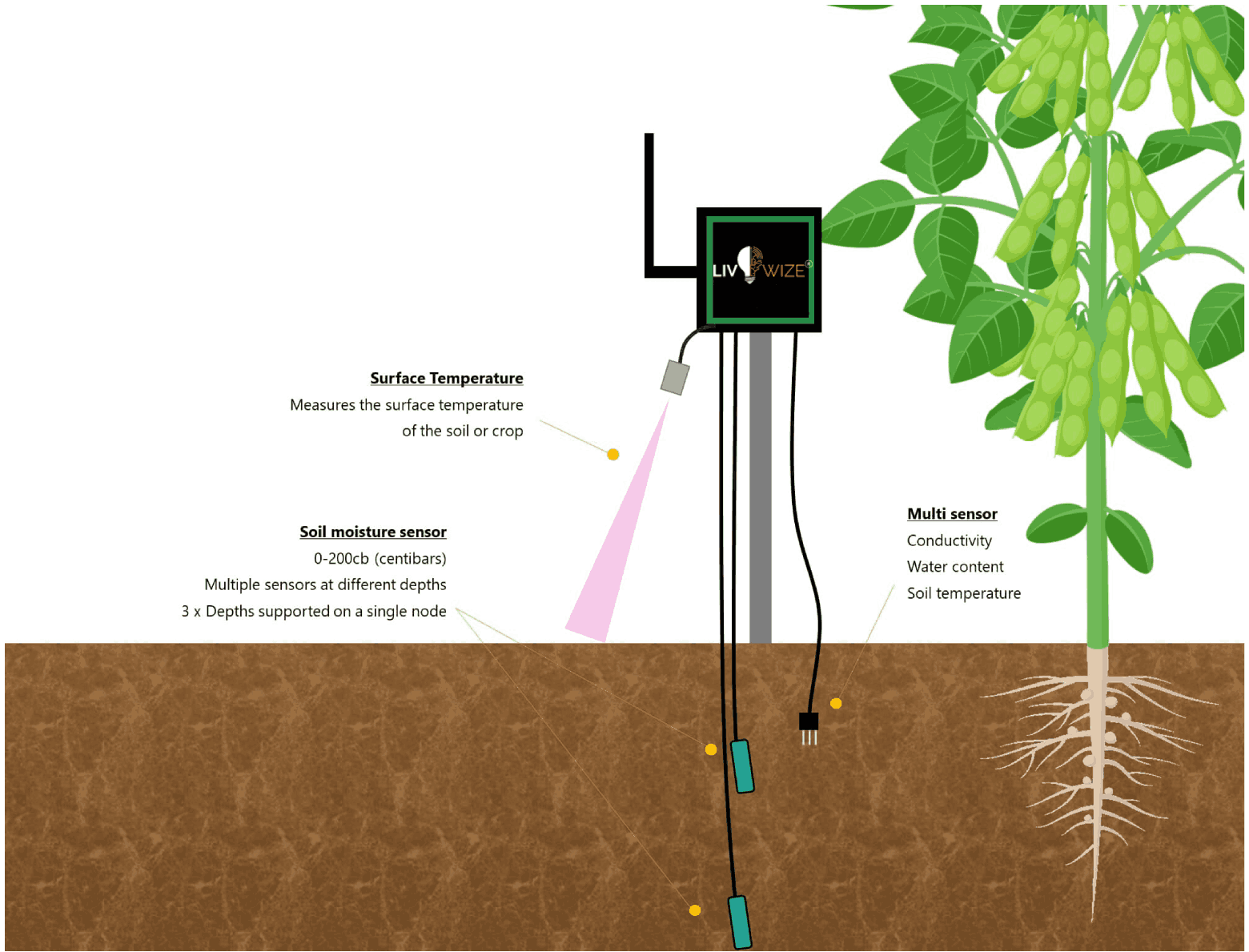
Agriculture systems can connect soil moisture, pH, EC, NPK, temperature, humidity and light sensors. Select the instruments for the crop, growing medium and control task, then match their outputs to the logger and field network.

Can it control irrigation automatically?

Livwize offers remote irrigation control with compatible pumps, valves and field measurements. Automatic rules, power arrangements and local overrides are agreed for each farm or polyhouse.

Next Step

Transform Your Farm with IoT

Deploy smart agriculture monitoring and increase yield while reducing costs.