Industrial IoT

IoT Remote Monitoring Solution for Remote Assets

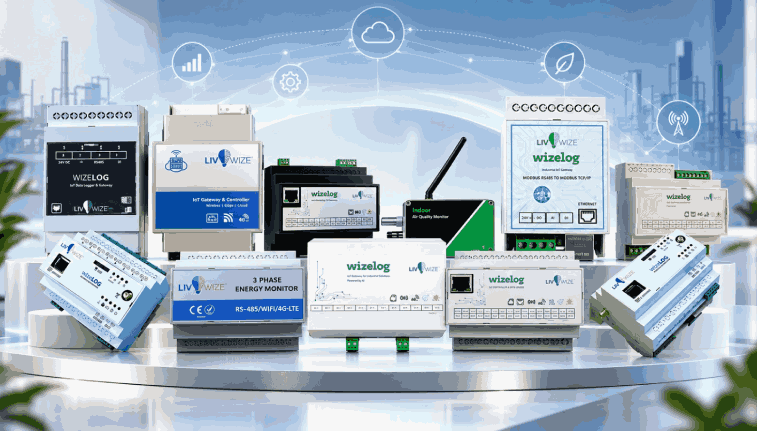
An IoT remote monitoring system reads sensors and meters on equipment at distant sites and sends the data over 4G, Wi-Fi or Ethernet to a dashboard, so faults and abnormal readings are seen without a site visit. Livwize supplies the data logger, connectivity and platform for assets such as transformers, DG sets, pumps and tanks.

  • 01

    Reduce Downtime

    Predict and prevent equipment failures proactively.

  • 02

    Cost Savings

    Eliminate unnecessary site visits and manual checks.

  • 03

    Data-driven

    Make operational decisions based on real-time data.

IoT Remote Monitoring System
How an IoT remote asset monitoring solution works
  • Real-time Dashboards

    Live data visualization for all connected equipment.

  • Threshold alerts

    Configured thresholds highlight readings for investigation.

  • Multi-protocol Support

    Modbus, MQTT, HTTP, OPC-UA for universal compatibility.

Overview

How an IoT remote asset monitoring solution works

Traditional monitoring requires on-site presence and manual data collection. Our IoT Remote Monitoring System eliminates these limitations by providing 24/7, cloud-connected visibility into your industrial operations from anywhere in the world.

Connect machines, sensors, and meters to our cloud platform for real-time dashboards, configured threshold alerts, and automated alerting, reducing downtime and operational costs significantly.

Key Benefits

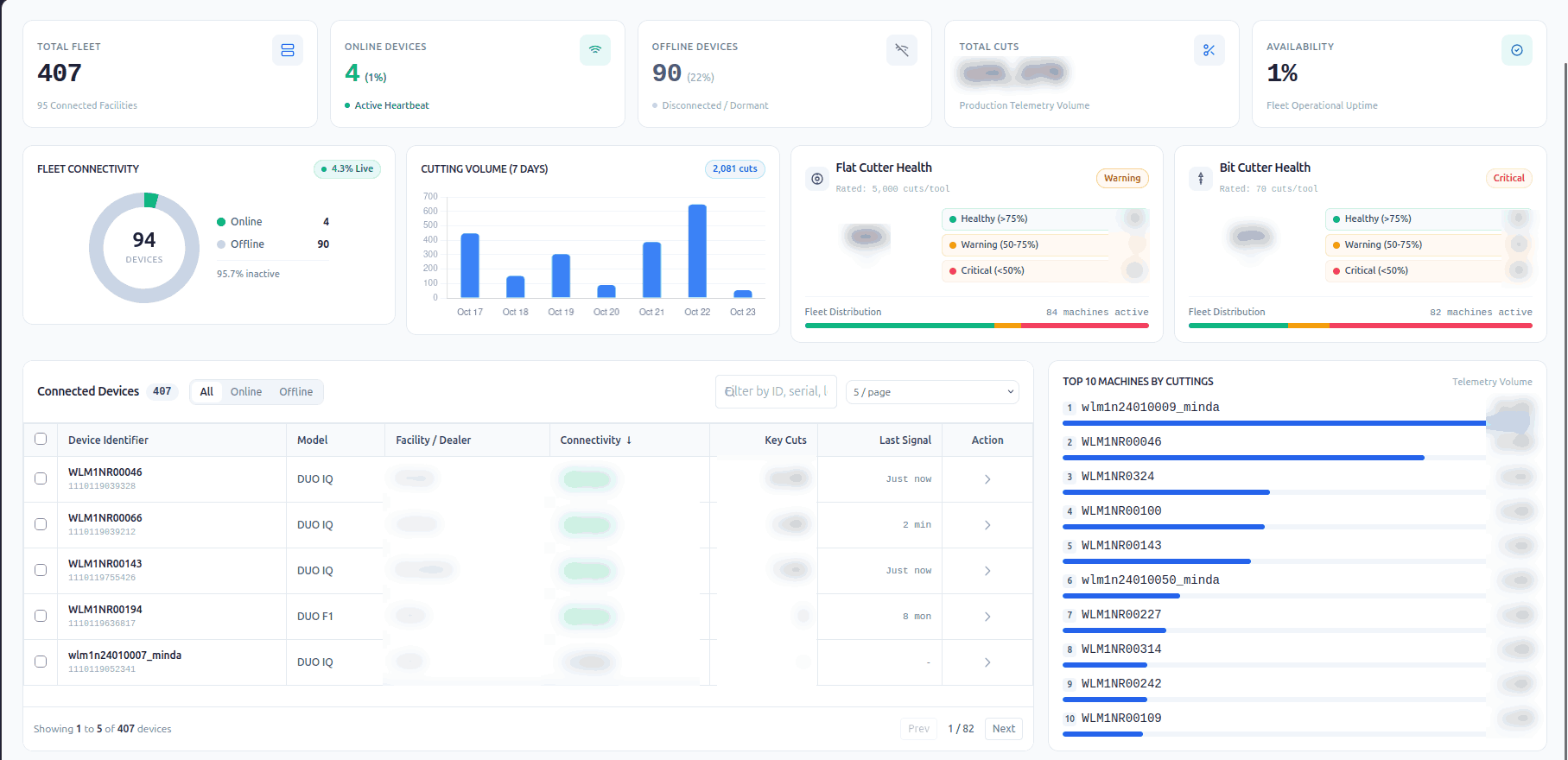
Asset readings and alerts across remote sites

Use the remote asset monitoring measurements below to review conditions, investigate changes and coordinate the team responsible for the equipment.

  • Asset condition visibility

    Predict and prevent equipment failures proactively.

  • Remote site review

    Eliminate unnecessary site visits and manual checks.

  • Asset history

    Make operational decisions based on real-time data.

  • Condition trend review

    Schedule maintenance based on actual condition, not time.

  • Multi-site dashboard

    Monitor operations from anywhere with internet access.

  • Fault and recovery records

    Track and improve Overall Equipment Effectiveness.

How It Works

Remote asset measurements, transmission and alerts

  • 01

    Connect Assets

    Install IoT sensors and gateways on equipment.

  • 02

    Data Collection

    Continuous data acquisition and cloud transmission.

  • 03

    Alerts and trend analysis

    Machine learning detects patterns and predicts failures.

  • 04

    Actionable Insights

    Real-time alerts and recommendations for operators.

Applications

Remote monitoring for transformers, generators, pumps and tanks

Match the remote asset monitoring configuration to the instruments, network and operator workflow at each installation.

  • Manufacturing

    Machine health, vibration, and temperature monitoring.

  • Power Plants

    Generator, transformer, and switchgear monitoring.

  • Oil & Gas

    Pipeline pressure, flow, and leak detection.

  • Telecom

    Tower site monitoring, DG, battery, and environment.

  • Water Utilities

    Pump station and treatment plant monitoring.

  • Infrastructure

    Bridge, tunnel, and structural health monitoring.

Remote asset monitoring and management

Start with the asset and the decision the operator needs to make. This table lists typical measurements to scope for each asset; the installed sensors, controller and meter determine the readings actually available.

Remote assets, measurement interfaces and example alerts
Asset What is measured Sensor or interface Typical configured alert
Transformers Load and temperature Compatible energy meter and temperature transmitter High temperature or overload threshold
DG sets Run state, fuel and electrical output Controller registers or separate compatible sensors Unexpected stop or low fuel
Pumps Run state, pressure, flow and current Modbus / 4–20 mA instruments and status inputs Low pressure or abnormal current
Tanks Liquid level Compatible ultrasonic or pressure sensor High or low level
Electrical panels Voltage, current, power and temperature Modbus energy meter and temperature sensors Voltage or temperature excursion
Telecom sites Site power, backup state and room conditions Meters, controller status and environmental sensors Mains failure or high room temperature

Turning remote readings into an asset record

A useful remote asset management system keeps each measurement associated with its site and equipment. Operators can compare current status with historical conditions, investigate an alert and decide whether a visit is necessary. Clear asset labels and timestamps make a multi-site dashboard usable by both central teams and local technicians.

Commissioning an IoT remote monitoring solution

Give each asset a clear identifier and location, then record its connected instruments, units and normal operating states. Compare representative dashboard readings with the local instrument so a scaling or wiring error can be corrected before rollout. Define how often values are collected and how the dashboard shows a stale or missing value.

Test the complete alert route with the team that will receive it. A pump that is intentionally stopped should be distinguishable from a pump that failed during an active request. Agree threshold delays and recovery messages with the operator, and keep local protective controls responsible for equipment protection.

Check what happens during loss of mobile coverage, gateway power and instrument communications. Local storage and retransmission depend on the installed logger. Document its capacity and recovery sequence, along with the site contact and investigation steps. A useful handover includes a device register, channel map and example report so a central team can interpret an event without guessing which measurement point produced it.
Frequently asked questions

Which assets can be monitored remotely?

Compatible sensors and meters can monitor transformers, DG sets, pumps, tanks and electrical panels. Each asset needs a defined measurement list, such as temperature, energy, runtime, pressure or level, and a suitable field interface.

What happens when the network goes down?

WizeLog and the OCEMS logger can buffer readings locally during a network interruption. They transmit stored records when connectivity returns; storage capacity and the logging interval determine the available outage coverage.

How are alerts sent?

Livwize monitoring systems provide dashboard alerts and support email or SMS notifications where configured. The deployment plan defines the limits, recipients and escalation process for each measurement.

Next Step

Go Remote with IoT Monitoring

Get real-time visibility into your operations from anywhere in the world.