Key Features

IoT Based Energy Monitoring System

An IoT based energy monitoring system connects energy meters and sensors to a gateway and cloud dashboard. It records kWh, power factor, voltage, current and run hours for each feeder or machine. Livwize’s WizeSense system helps plants and buildings compare consumption, review trends and respond to configured alerts.

  • 01

    Energy Dashboard:

    Central Access to Data

  • 02

    Resource Monitoring:

    Real Time Logging

  • 03

    Smart Analytics:

    Data Analytics for Prediction

IoT Energy Monitoring System
Field-ready architecture for IoT Energy Monitoring System
  • Energy Dashboard:

    Central Access to Data

  • Resource Monitoring:

    Real Time Logging

  • Smart Analytics:

    Data Analytics for Prediction

Key Features

Real-time energy monitoring system: WizeSense

With rising energy costs and sustainability concerns, businesses, industries, and households are looking for smarter ways to monitor and manage power consumption. Traditional energy monitoring methods lack real-time insights, automation, and predictive analytics, leading to energy waste and inefficiencies.

IoT based Real Time Energy Monitoring System. We let you monitor your energy consumption and analyze your electricity/power usage with personal home energy and industrial energy monitors. We integrate IoT based Energy Monitoring Devices to our cloud based web platform that provides you real time energy monitoring and predictive maintenance benefits for electricity, gas, water and solar power.

Label each connected meter by the circuit or machine it observes, and confirm its units before comparing readings on the dashboard.

Energy Dashboard:

Key Features

An IoT based Energy Monitoring System offers real-time energy tracking, trend analysis, and remote control of energy usage. This ensures cost savings, reduced carbon footprint, and operational efficiency across various sectors.

  • Energy Dashboard:

    Central Access to Data

  • Resource Monitoring:

    Real Time Logging

  • Smart Analytics:

    Data Analytics for Prediction

  • Event based Alerts:

    Exception review & threshold alerts

    Threshold Check & instant notifications when consumption spikes occur to prevent energy wastage.

Key Features

IoT based Energy Monitoring System

  • 01

    IoT Sensor Deployment

    Installation records

    Smart energy meters and sensors are installed on electrical circuits, machines, and appliances to monitor energy consumption.

    Agree which operator receives an event notification and how the team will investigate the affected meter or circuit.

  • 02

    Real-Time Data Collection & Transmission

    Align measurement timestamps

    Energy usage data is transmitted via Wi-Fi, LoRaWAN, or 4G LTE to a cloud-based dashboard.

    Compare historical consumption with the current operating pattern before deciding which equipment needs attention.

  • 03

    Remote Monitoring & Control

    Operator dashboard access

    Users can view real-time energy reports and adjust power settings remotely via a mobile app or web dashboard.

    Label each connected meter by the circuit or machine it observes, and confirm its units before comparing readings on the dashboard.

  • 04

    Energy trends and alerts

    Compare operating trends

    Recorded readings show consumption patterns, and configured alerts highlight measurements that need attention.

IoT based energy management with monitoring data

Monitoring shows where energy goes; energy management uses that information to guide operational action. Livwize’s published solution includes real-time consumption visibility, event-based alerts, historical analysis and remote monitoring and control. An IoT based smart energy management system connects those functions to the way a site actually operates.

Use consumption trends to identify out-of-hours operation and investigate sudden changes in load. Agree the action associated with each alert, the person responsible and any required control interlocks. Load scheduling, peak-tariff automation and power-factor correction depend on the selected meters and controls and should be included explicitly in the project scope.
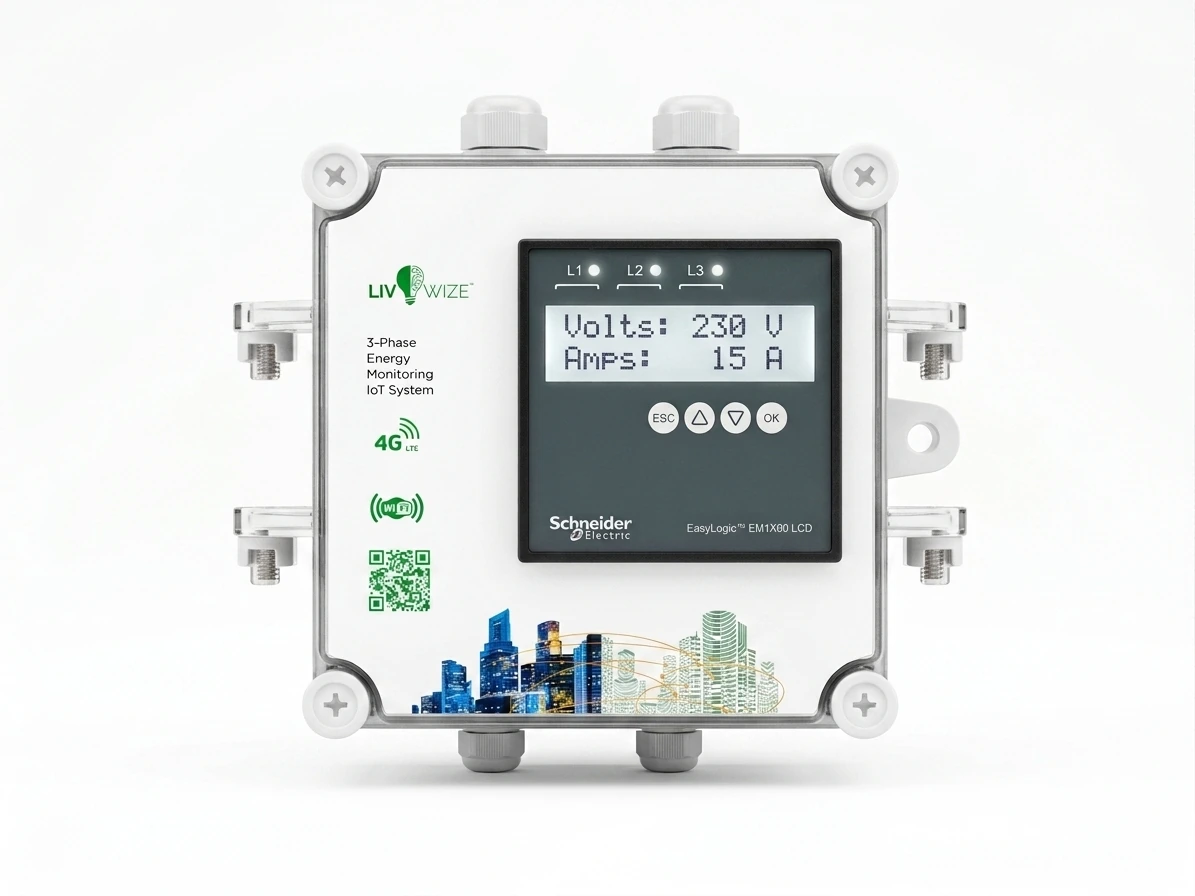
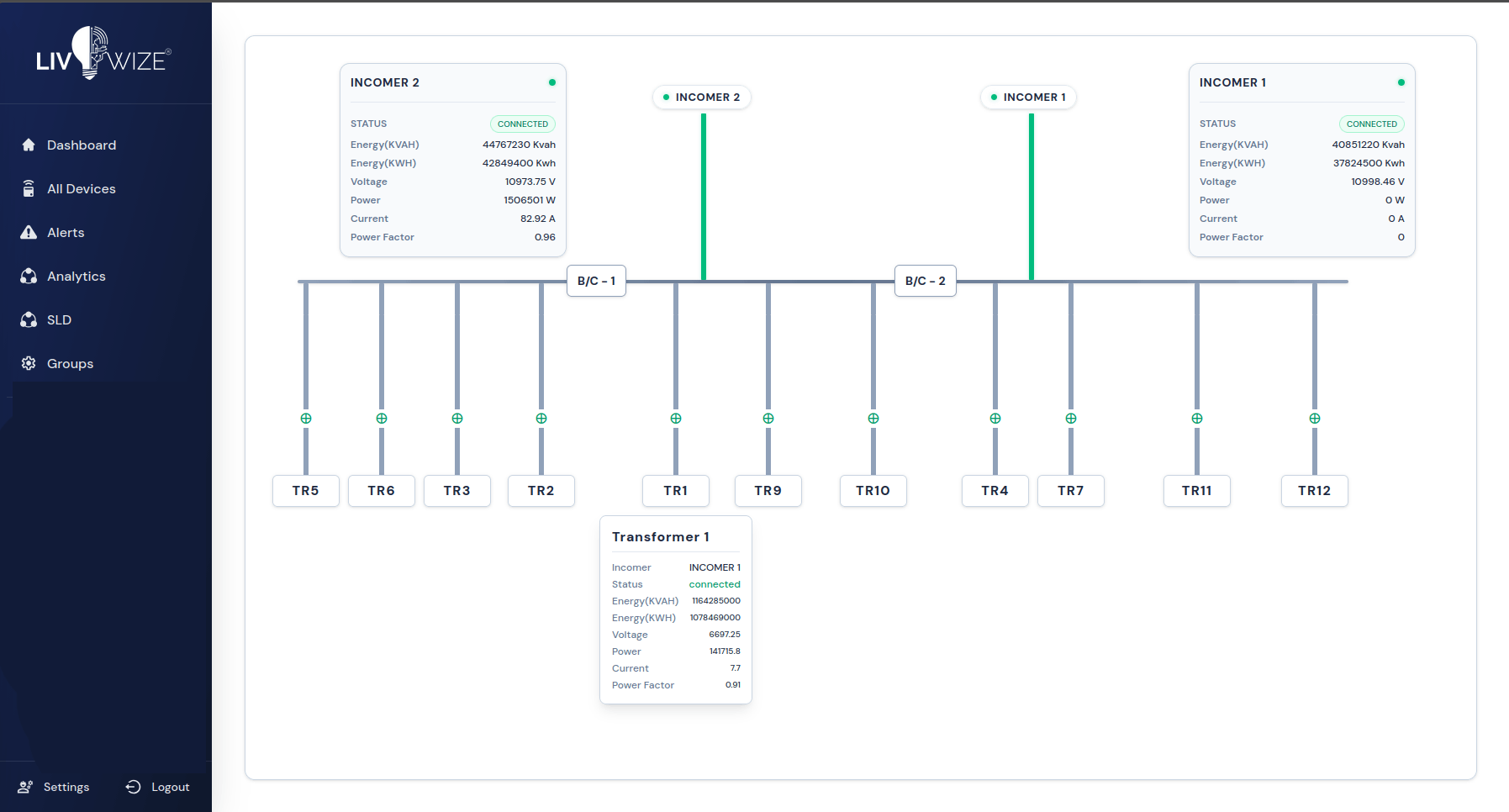
Energy monitoring parameters and meter integration

The values available depend on the connected meter’s register map. This table explains the parameters to review during integration; it does not claim that every supplied meter reads every value.

Electrical parameters to confirm for the selected meter
Parameter Unit / meaning Use
kWh Energy consumed Compare daily consumption
kW Active power Track load and demand
kVA Apparent power Review electrical loading
PF Power factor Investigate inefficient loading
V Voltage Check supply trends
A Current Compare circuit loading
Hz Frequency Review supply conditions
THD Total harmonic distortion (%) Assess power-quality trends when supported
Logging interval Set for the project Balance visibility and data volume
Meter connection Modbus through a compatible gateway Confirm meter model and register map

Energy monitoring system architecture

Energy meters measure consumption and electrical parameters at each feeder. A WizeLog gateway reads the configured meter registers, timestamps the values and transmits records to the cloud. The dashboard makes history and alerts available to operations teams, with each circuit identified so that readings can be traced back to the equipment.

Choose a connected meter and its register map through the smart-metering workflow. Compare load consumption with solar generation when the site has PV, while keeping import, export and generation channels separate. Agree meter scaling, units and missing-data handling during commissioning.

Energy meters send readings to a WizeLog gateway, then the cloud, dashboard and alerts

Frequently asked questions

What is an IoT based energy monitoring system?

It is a set of smart energy meters and sensors on electrical circuits, machines and appliances that send consumption data over the internet to a cloud dashboard, where it can be tracked in real time, analysed and acted on.

Which parameters does the system measure?

Energy (kWh), power (kW), power factor, voltage, current and frequency per meter, plus run hours; the same platform can also log water, gas and solar generation.

Can it read our existing Modbus energy meters?

Yes. Livwize's WizeLog gateway reads Modbus RS-485 energy meters already installed in a panel and sends the data over 4G, Ethernet or Wi-Fi.

What happens when consumption spikes?

The system sends an alert as soon as a threshold is crossed or a failure is predicted, so the team can act before energy is wasted or equipment trips.

How does real-time energy monitoring work?

Energy meters measure the electrical circuits and pass their registers to a gateway. The gateway uploads timestamped readings so the dashboard can show consumption trends, compare feeders and flag threshold crossings.

What is the difference between energy monitoring and an energy management system?

Energy monitoring shows when and where electricity is consumed. Energy management uses that information to plan and evaluate actions, such as operating schedules or load changes; automatic switching must be scoped for the equipment and its control protections.

Contact Us

Drop us a message

Get to know new IoT trends and make a shift!
