Industry 4.0

Industry 4.0 & IIoT Solutions

IIoT (Industrial Internet of Things) solutions connect machines, energy meters and sensors on the factory floor to software that tracks uptime, output, energy and equipment health in real time. Livwize builds these Industry 4.0 systems end to end: retrofit sensors and gateways, Modbus and 4G connectivity, dashboards, alerts and maintenance analytics.

  • 01

    OEE Improvement

    Increase equipment effectiveness by 15-25%.

  • 02

    Downtime Reduction

    Predict and prevent unplanned downtime.

  • 03

    Quality Enhancement

    Supported quality signals can be reviewed alongside production data.

Industry 4.0 & IIoT Solutions
Industry 4.0 & IIoT Solutions overview
  • Predictive Maintenance

    Condition trends support equipment-health review.

  • Digital Twin Technology

    Create virtual replicas of physical assets for simulation and optimization.

  • Real-time OEE

    Track Overall Equipment Effectiveness across production lines.

Overview

How IIoT connects machines, meters and factory dashboards

The era of Industry 4.0 is here, transforming manufacturing, supply chains, and industrial automation with IIoT, trend analysis, digital twins, and smart factory technologies.

We guarantee a smooth transition towards Industry 4.0 with seamless machine-to-machine connectivity at minimal cost. Our team provides end-to-end assistance from design to deployment, ensuring your manufacturing operations become data-driven, automated, and globally competitive.

From real-time production monitoring to predictive maintenance, from quality control to supply chain optimization, we bring Industry 4.0 to life for Indian manufacturers.

<

How It Works

IIoT retrofit assessment, integration and commissioning

  • 01

    Assessment

    Evaluate current infrastructure and identify digitalization opportunities.

  • 02

    Architecture Design

    Design IIoT architecture with sensors, gateways, and cloud platform.

  • 03

    Deployment

    Install IoT devices, connect machines, and configure analytics.

  • 04

    Optimization

    Continuous improvement through recorded measurements and data-driven decisions.

Applications

Connected monitoring across industrial production sites

Match the connected factories configuration to the instruments, network and operator workflow at each installation.

  • Discrete Manufacturing

    Automotive, electronics, and machinery production.

  • Process Industries

    Chemical, pharma, and food processing automation.

  • Assembly Lines

    Connected assembly with real-time quality tracking.

  • Warehousing

    Smart inventory management and automated logistics.

  • Utilities

    Smart grid and utility infrastructure management.

  • Heavy Industry

    Steel, cement, and mining operations optimization.

Industrial IoT platform for connected factories

An industrial IoT platform gives production, maintenance and energy teams a common view of factory data. Machine signals, compatible PLC registers and meter readings enter the system through the field gateway. Each record needs a timestamp, source and unit so the dashboard can distinguish one machine, line or shift from another. This makes it possible to investigate a change using the same underlying record rather than separate spreadsheets.

OEE dashboards bring availability, performance and quality into one operational discussion. Start by defining what counts as running, idle, stopped and rejected for the actual process. A connected machine can produce frequent readings without providing a useful production measure if those states are unclear. The implementation should therefore connect the machine signals to the operator’s definitions before producing an overall score.

Machine-health dashboards use condition readings such as vibration and temperature to identify changes that deserve investigation. Energy dashboards show the relationship between electrical use and operating activity. Reviewing the two together can help a team ask whether a machine ran outside the production window or whether a change in condition coincided with a load change. The dashboard supports the investigation; maintenance decisions still depend on the machine and site procedures.

IIoT services: from retrofit to rollout

A retrofit starts with the equipment already installed. Review the machine or meter interfaces, cabinet access, electrical conditions and available network before choosing the gateway. Some assets expose registers through Modbus; others need separate sensors or a compatible interface. Record the source of each measurement and its engineering unit while the team is still at the machine.

The gateway configuration maps those signals into a consistent record. Commissioning compares the dashboard reading with the instrument or local display, checks timestamps and verifies that a communications interruption is visible. A pilot should cover representative operating conditions so operators can identify misleading labels or alerts before the configuration is repeated across more assets.

A rollout then applies the tested pattern to additional lines or sites. Keep a device register, channel map and configuration record so later replacements remain understandable. Support teams need to know which sensor, interface and gateway produced a missing reading. That is why documentation, diagnostics and operator handover are part of industrial connectivity rather than an afterthought.

  • Survey: identify the operating question, available interfaces and network conditions.
  • Sensors: choose the measurement location and document the instrument output.
  • Gateway: acquire and time-stamp the readings using compatible interfaces.
  • Integration: map records into the data platform or an existing SCADA workflow.
  • Dashboards: define machine states, trends and the people responsible for alerts.
  • Support: hand over the channel map, configuration and investigation process.

Industry 4.0 solution provider in India

Livwize works across industrial and infrastructure environments, including manufacturing, power, oil and gas, telecom and solar. For organizations comparing Industry 4.0 solution providers in India, the useful starting point is a specific operational requirement: a machine whose condition is difficult to inspect, a meter that is still read manually, or a group of sites with inconsistent reporting.

Connected factory IoT platforms in India must fit the installed equipment and the way local teams work. A site with legacy meters, intermittent connectivity and a shared maintenance team has different requirements from a new automated line. Agree which functions belong at the edge, which records go to the cloud and which actions require an operator’s approval. Existing local controls and protective functions should be accounted for in the integration design.

An industrial IoT project also needs a practical acceptance process. Define a representative set of measurements, compare them against their source and check that each dashboard label is meaningful. Test alerts with the people who will receive them and decide how an unavailable instrument is distinguished from a stopped machine. These checks make the resulting platform easier to operate and expand.
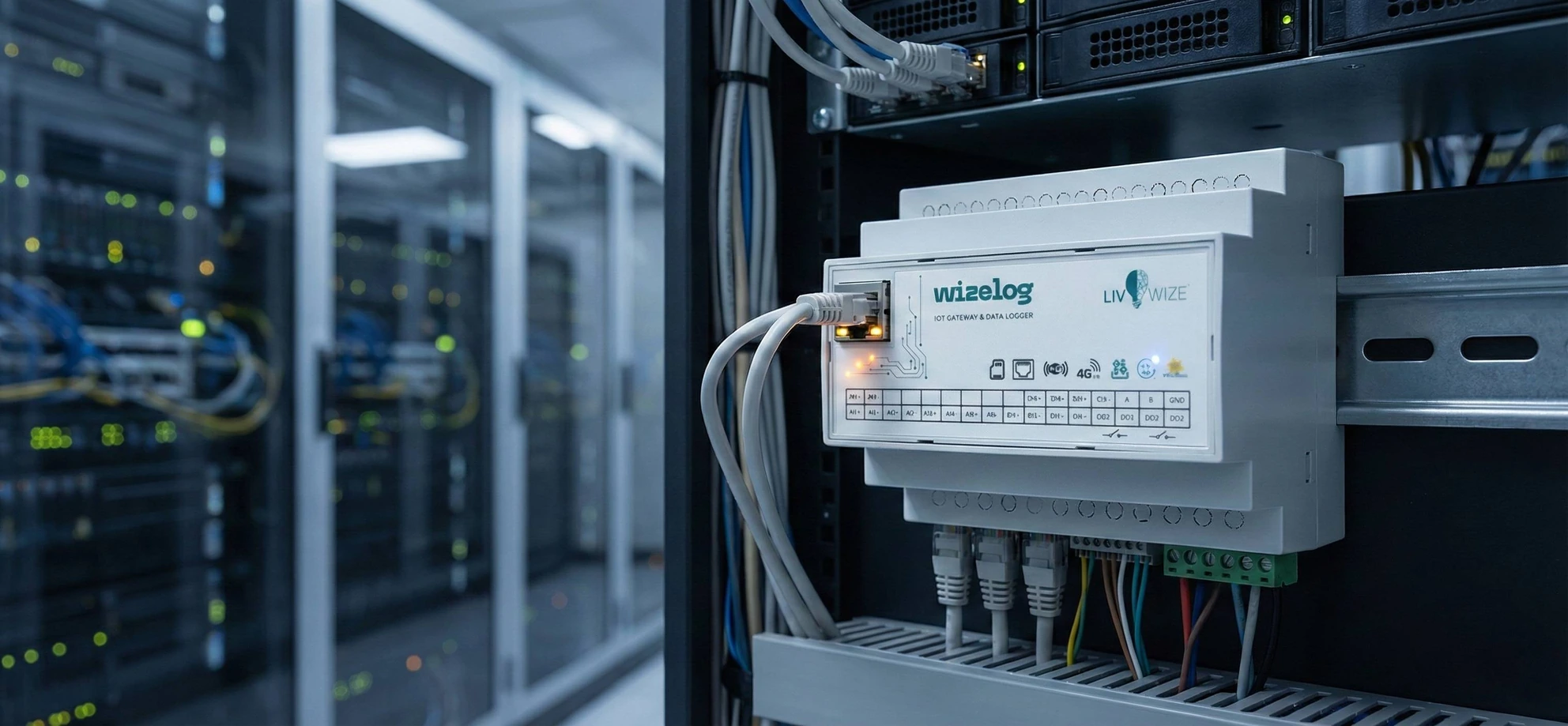
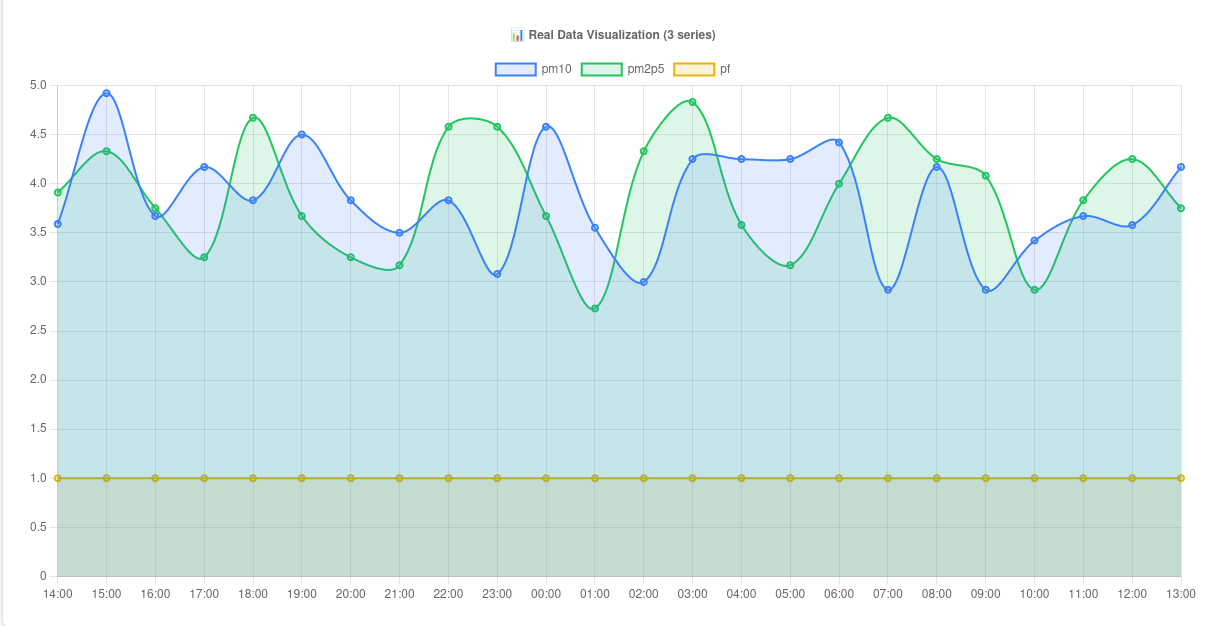
Machine and utility data in one industrial monitoring workflow

Machine-health and transformer monitoring can share a data platform while keeping their measurements and operating responsibilities distinct. Machine teams review condition and production records; electrical teams review load and temperature measurements for the equipment they maintain. The configuration should identify the asset clearly and preserve the context needed to interpret its readings.

Connected-factory measurements and operator views
Area Data source Operator view
Production Compatible machine or PLC signals Run states, stops and OEE inputs
Machine health Vibration and temperature sensors Condition trends and alerts
Electrical utilities Meters and compatible transformer measurements Load and temperature history
Environment Air-quality and room-condition sensors Work-area trends and threshold alerts

IIoT deployment examples in Indian plants

An NCR automotive key-cutting machine project combined Wi-Fi machine-health monitoring, cutter-use tracking and energy data, with remote rental-control functionality.

An oil and gas R&D campus in Haryana used 4G LTE energy monitoring for incomer and transformer-linked feeders, with kWh, power factor, run hours, current, voltage and frequency in a facilities dashboard.

A North-East India refinery project used 4G LTE machine-panel energy monitoring to bring the electrical readings into a real-time dashboard.

Frequently asked questions

What is IIoT and how is it different from IoT?

IoT connects physical devices to software over a network. IIoT applies that approach to industrial machines, utilities and processes, where equipment interfaces, reliable data collection and operational continuity shape the design.

Can old machines without a PLC be monitored?

Retrofit sensors and meters can collect measurements from machines without a PLC. The survey identifies accessible electrical, temperature, vibration or status signals and connects compatible instruments to a gateway.

What do I need to measure OEE?

Overall equipment effectiveness combines availability, performance and quality. A useful OEE record therefore needs operating time and stops, production counts or cycle times, and good-versus-rejected output, with an agreed schedule and reference cycle.

How does IIoT enable predictive maintenance?

IIoT keeps a history of machine condition, runtime and operating measurements. Trends and abnormal readings help maintenance teams investigate deterioration; the useful signals and alert rules depend on the equipment.

Next Step

Begin Your Industry 4.0 Journey

Our IIoT experts will design a custom digital transformation roadmap for your facility.