What does smart water management measure?
A project can combine flow, pressure, tank level and selected water-quality measurements. The required instruments depend on the source, distribution network and operating decisions.
End-to-end IoT water monitoring from source to consumption. Real-time leak detection, quality analysis, level monitoring, and distribution optimization.
Smart water management uses connected flow, level, pressure and quality measurements to make water infrastructure visible from source to consumption. Livwize combines sensors, gateways and dashboards for utilities, industrial sites and commercial facilities.
01
Leak Prevention
Detect and locate leaks before they cause major losses.
02
Quality Assurance
Continuous monitoring ensures water safety standards.
03
Reduce NRW
Lower Non-Revenue Water through optimized distribution.
Leak Detection
Real-time acoustic and flow-based leak detection in pipelines.
Quality Analysis
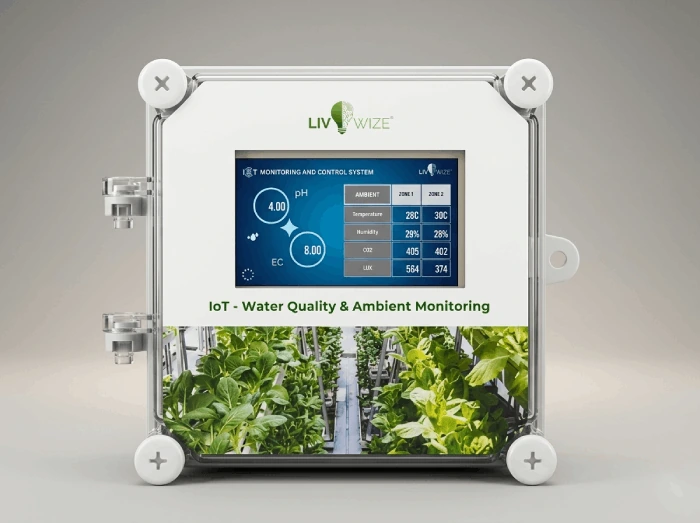
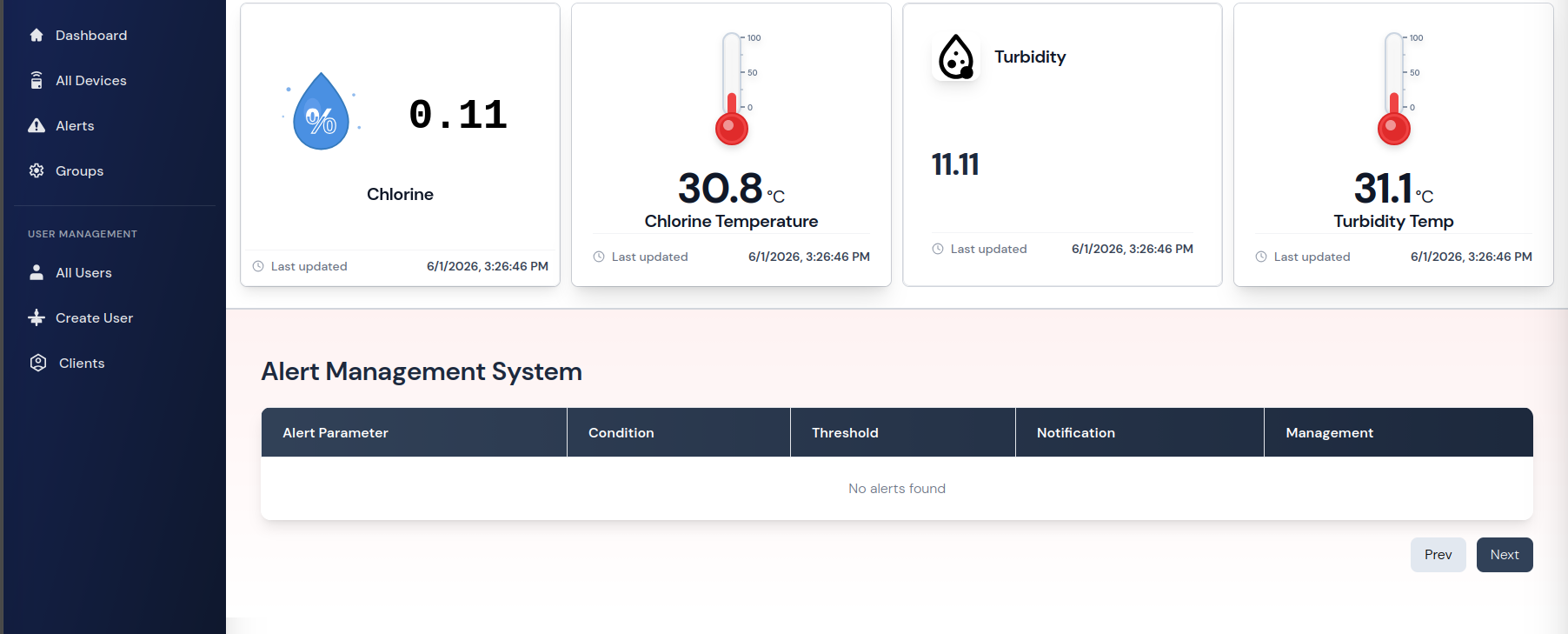
Continuous monitoring of pH, TDS, turbidity, and dissolved oxygen.
Level Monitoring
Ultrasonic and pressure-based tank and reservoir level tracking.
Overview
Water is our most precious resource. Our Smart Water Management system uses IoT sensors, real-time analytics, and automated controls to optimize water usage across municipalities, industries, and commercial buildings.
From source monitoring to distribution optimization, leak detection to quality analysis, we provide complete visibility and control over your water infrastructure.
Key Benefits
Use the water infrastructure measurements below to review conditions, investigate changes and coordinate the team responsible for the equipment.
Detect and locate leaks before they cause major losses.
Continuous monitoring ensures water safety standards.
Lower Non-Revenue Water through optimized distribution.
Optimize pump operations for reduced energy consumption.
Historical analytics for infrastructure planning.
Automated compliance reporting for water authorities.
How It Works
Deploy water quality, flow, pressure, and level sensors.
Continuous data collection and cloud transmission.
AI detects anomalies, leaks, and optimization opportunities.
Trigger alerts, activate valves, and generate reports.
Applications
Match the water infrastructure configuration to the instruments, network and operator workflow at each installation.
City water supply monitoring and leak detection.
Process water monitoring and wastewater management.
Water consumption tracking and optimization.
Irrigation water source and distribution monitoring.
Treatment plant monitoring and control.
Dewatering and water usage tracking for sites.
A water network is easier to understand when its measurements are connected to the physical supply path. Identify the source, storage, pumping points and consumption areas before choosing the sensors. A useful dashboard shows where a reading was taken and how it relates to the rest of the system, so teams can compare an unexpected change with nearby conditions.
Flow monitoring records movement through the network, while tank and reservoir level shows available storage. Pressure helps interpret distribution conditions. Water-quality readings describe a different part of the operational picture and need instruments suited to the liquid and measurement point. Bringing these records together supports investigation without treating one sensor as a substitute for another.
Livwize supports municipalities, industrial plants and commercial buildings. The monitoring design can also include treatment facilities, construction water use and irrigation supplies. Each setting needs a clear account of the measurement location, instrument range, communications arrangement and the people responsible for responding to alerts.
A change in a single flow value does not explain its cause. Compare it with tank level, pump status and the time of day to understand whether the change is expected. The same approach helps investigate a slow fill or an unusual overnight demand. An operator needs the measurement context and recent history alongside the latest number.
Define high and low thresholds around the way the site operates. An alert that always triggers during a normal filling cycle becomes difficult to use. Review representative operating periods and make sure the dashboard distinguishes an instrument that is unavailable from a measured value of zero. Keep the local equipment controls and protective functions clear when adding remote monitoring.
Where the project includes automated valves or pumps, specify the control interface and required interlocks separately from the monitoring points. A connected record can support decisions about distribution and filling, while the physical installation determines which actions are available. Test the expected sequence with the operator during commissioning.
Livwize integrates pH, TDS, turbidity and dissolved-oxygen monitoring alongside flow, pressure and level. Measurement ranges and sensor maintenance requirements depend on the actual probe. The table provides a planning structure for the deployment; it does not replace the instrument datasheet or any required water-quality assessment.
| Parameter | Purpose | Selection detail |
|---|---|---|
| Flow | Track supply and consumption | Confirm meter unit and output |
| Pressure | Review distribution conditions | Select range and mounting point |
| Level | Track tank and reservoir storage | Confirm sensor method and tank geometry |
| pH | Review acidity / alkalinity trends | Confirm probe and calibration process |
| TDS | Review dissolved-solids trends | Confirm selected instrument range |
| Turbidity | Review suspended-particle trends | Confirm probe range and installation |
| Dissolved oxygen | Track treatment-process conditions | Confirm probe and maintenance needs |
A project can combine flow, pressure, tank level and selected water-quality measurements. The required instruments depend on the source, distribution network and operating decisions.
Flow and storage history can reveal unusual patterns that warrant investigation. Confirm the cause using the network layout, instrument condition and local operating records.
Next Step
Deploy smart water monitoring and reduce water losses across your infrastructure.